
The Story Behind These Sweet Little Hearts
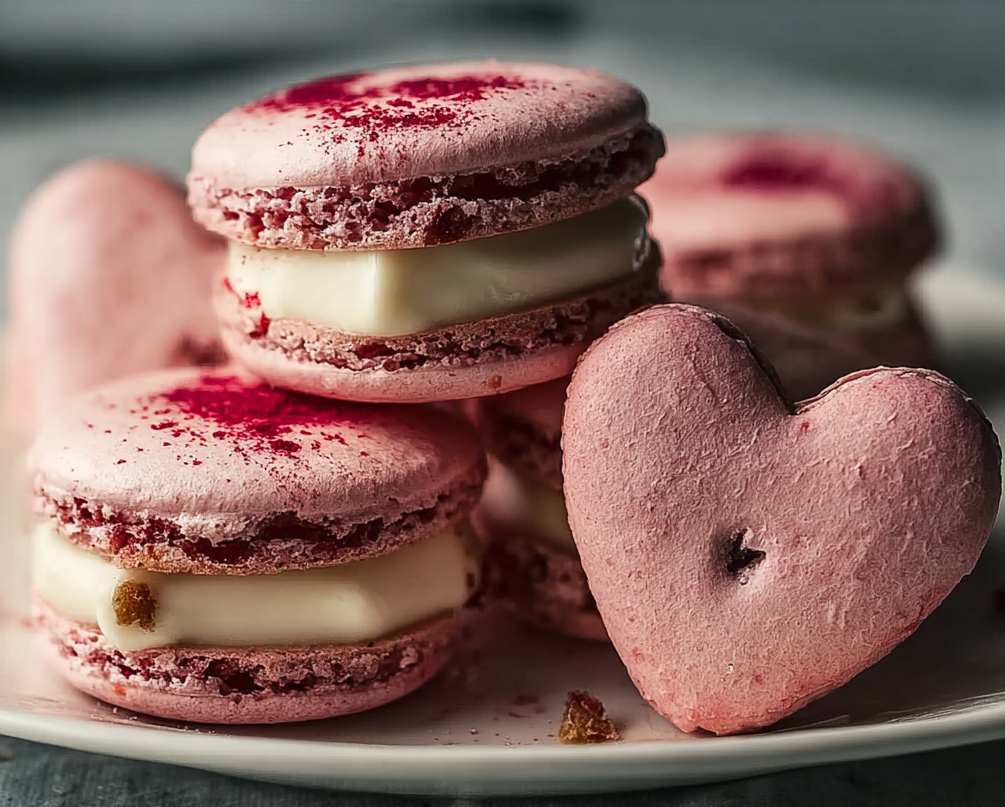
The first time I made these Valentine’s Day Heart Macarons, my kitchen looked like it had been dusted in pink sugar confetti. Benji, my endlessly curious Labrador, planted himself in front of the oven, nose twitching every time the light flicked on and tail thumping against the cabinets. While a pot of chicken simmered gently for his dinner, I hovered over trays of delicate heart-shaped shells, silently begging them to rise properly and form those perfect little “feet.”
When the timer chimed, I slid the tray out and held my breath. Glossy, delicate hearts stared back at me bakery-worthy and surprisingly perfect for a home that permanently features dog hair as décor. Benji happily devoured his chicken, I took my first bite of macaron, and it honestly felt like we had both won Valentine’s Day.
Now, baking these heart macarons has become my little February tradition. Whenever I’m already in the kitchen making something special for Benji like his pink beet dog biscuits I’ll pipe tray after tray of sweet hearts. The house fills with the scent of vanilla, butter, and a whisper of almond. One year, I gifted a small box of these macarons to a friend and included homemade dog treats for her pup so everyone could join the celebration. Now she texts me every January asking if we’re repeating our “macarons and dog snacks” tradition.
That’s what these heart macarons mean to me. They’re more than a romantic dessert they’re a simple ritual that includes the whole family, paws and all.
How to Make Valentine’s Day Heart Macarons
Step 1: Prepare the Dry Ingredients
For smooth, elegant shells, begin with a fine, lump-free mixture. Combine almond flour and powdered sugar in a large bowl and sift thoroughly. Press any stubborn bits through the sieve with the back of a spoon. The mixture should feel soft and airy.
If your almond flour seems slightly coarse or oily, pulse it briefly in a food processor with the powdered sugar (about 5–10 short pulses), then sift again. This extra step helps prevent cracked shells and bumpy tops.
Step 2: Whip the Meringue
The meringue is the structure of your macarons, so cleanliness matters. Make sure your bowl is completely grease-free.
- Beat room-temperature egg whites on low speed until foamy.
- Gradually add granulated sugar while mixing.
- Increase speed and whip until stiff, glossy peaks form.
When you lift the beaters, the peaks should stand tall without drooping. Gently mix in vanilla bean paste and a small amount of gel red or pink food coloring.
Step 3: The Macaronage (Folding Stage)
Add the dry mixture to the meringue in stages. Using a spatula, fold gently:
- Scrape around the bowl.
- Press some batter lightly against the sides to deflate slightly.
- Continue folding until the batter flows like thick lava.
When lifted, the batter should fall in a ribbon and slowly melt back into itself within about 10 seconds. Under-mixed batter leads to cracked tops; over-mixed batter spreads too much and loses its shape.
Transfer to a piping bag and pipe heart outlines onto a prepared baking sheet.
Make-Ahead & Storage Tips
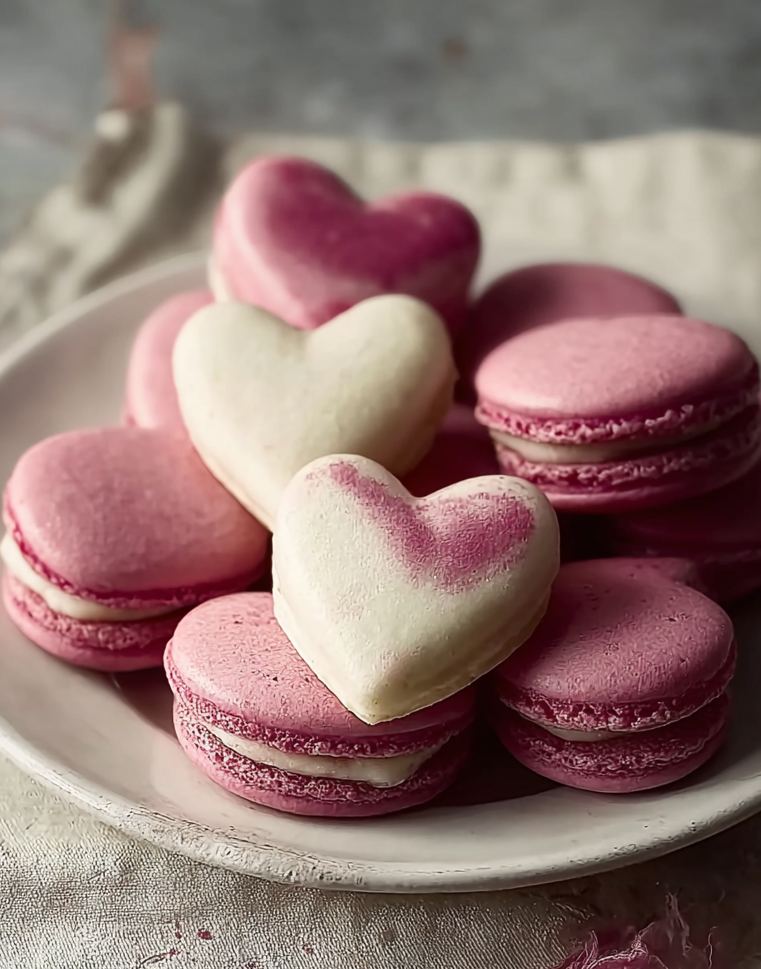
Macarons actually improve with time.
After filling and assembling:
- Store in a single layer in an airtight container.
- Refrigerate for 24 hours before serving for best texture.
- Keep refrigerated up to 4–5 days.
- Bring to room temperature for 15–20 minutes before serving.
For freezing:
- Unfilled shells can be frozen up to 2 months (layered with parchment).
- Filled macarons can be frozen in a single layer until firm, then transferred to a container.
- Thaw overnight in the refrigerator inside the container to prevent condensation.
Avoid leaving them uncovered in the fridge macarons absorb moisture and odors easily.
Ingredient Tips for the Best Results
- Use super-fine almond flour.
- Sift dry ingredients at least once (twice if needed).
- Choose gel or powdered food coloring to avoid thinning the batter.
- Use room-temperature egg whites.
- Make sure butter is soft but not greasy for smooth buttercream.
Vanilla bean paste adds depth and beautiful specks, but almond extract can give a subtle marzipan-style flavor.
Fun Party Variations
Once you master the base recipe, get creative:
- Pipe half the batch pink and half red for an ombré platter.
- Roll filled edges in crushed freeze-dried strawberries or red sanding sugar.
- Flavor buttercream with raspberry jam, chocolate hazelnut spread, or strawberry extract.
- For a sophisticated twist, use chocolate ganache inside pale shells.
You can easily turn one batch into a charming macaron assortment.
Serving & Sharing
When you pull a tray of delicate hearts from the oven, it’s about more than dessert. It’s about creating something thoughtful and joyful.
Serve them:
- After a romantic dinner
- In a gift box for a friend
- Alongside tea for a quiet moment
Don’t worry if your hearts aren’t perfectly shaped. The love and effort behind them matter far more than tiny cracks or uneven curves.
Frequently Asked Questions
What makes heart macarons perfect for Valentine’s Day?
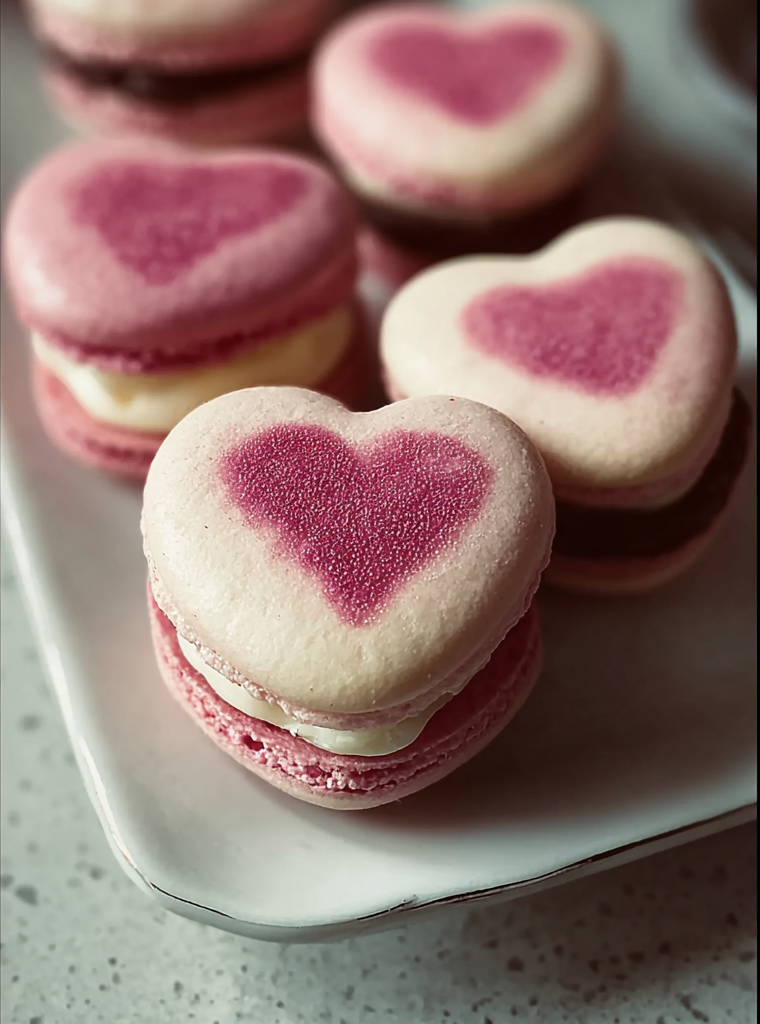
Their shape says “I love you” before anyone takes a bite. The soft pink or red shells paired with creamy filling make them feel elegant and festive. They’re perfect as gifts, romantic desserts, or sweet additions to a celebration table.
How do I pipe neat heart shapes?
- Draw heart outlines on parchment paper and flip it over.
- Hold your piping bag straight up.
- Pipe a “V” shape, starting at each top curve and meeting at the point.
- Use a toothpick to gently fix uneven tips.
A properly mixed batter (lava-like consistency) helps maintain clean shapes.
How far ahead can I make them?
- Shells: 1–2 days in advance (airtight container, cool room).
- Filled macarons: refrigerate up to 3 days.
- Freeze assembled macarons up to 1 month.
Let them sit at room temperature 20–30 minutes before serving for the best texture.
Love-Inspired Valentine Macarons for Dogs
The first time I made these Valentine’s Day Heart Macarons, my kitchen looked like it had been dusted in pink sugar confetti. Max, my endlessly curious Labrador, planted himself in front of the oven, nose twitching every time the light flicked on and tail thumping against the cabinets. While a pot of chicken simmered gently for his dinner, I hovered over trays of delicate heart-shaped shells, silently begging them to rise properly and form those perfect little “feet.”
When the timer chimed, I slid the tray out and held my breath. Glossy, delicate hearts stared back at me bakery-worthy and surprisingly perfect for a home that permanently features dog hair as décor. Max happily devoured his chicken, I took my first bite of macaron, and it honestly felt like we had both won Valentine’s Day.
Now, baking these heart macarons has become my little February tradition. Whenever I’m already in the kitchen making something special for Max like his pink beet dog biscuits I’ll pipe tray after tray of sweet hearts. The house fills with the scent of vanilla, butter, and a whisper of almond. One year, I gifted a small box of these macarons to a friend and included homemade dog treats for her pup so everyone could join the celebration. Now she texts me every January asking if we’re repeating our “macarons and dog snacks” tradition.
That’s what these heart macarons mean to me. They’re more than a romantic dessert they’re a simple ritual that includes the whole family, paws and all.
Ingredients
- For the Macaron Shells
- 1 cup confectioners’ (powdered) sugar
- ½ cup ultra-fine almond flour
- 2 large egg whites, room temperature
- ¼ cup granulated sugar
- ½ teaspoon vanilla bean paste
- 3–4 drops red or pink gel food coloring (optional)
- For the Vanilla Buttercream Filling
- ½ cup unsalted butter, softened
- 1 cup confectioners’ (powdered) sugar
- 1 teaspoon vanilla bean paste
- 2 tablespoons heavy cream or whole milk
- A small pinch of salt
- 2–3 drops red food coloring (optional)
Instructions
- Beat room-temperature egg whites on low speed until foamy.
- Gradually add granulated sugar while mixing.
- Increase speed and whip until stiff, glossy peaks form.
Step 1: Prepare the Dry Ingredients
For smooth, elegant shells, begin with a fine, lump-free mixture. Combine almond flour and powdered sugar in a large bowl and sift thoroughly. Press any stubborn bits through the sieve with the back of a spoon. The mixture should feel soft and airy.
If your almond flour seems slightly coarse or oily, pulse it briefly in a food processor with the powdered sugar (about 5–10 short pulses), then sift again. This extra step helps prevent cracked shells and bumpy tops.
Step 2: Whip the Meringue
The meringue is the structure of your macarons, so cleanliness matters. Make sure your bowl is completely grease-free.
When you lift the beaters, the peaks should stand tall without drooping. Gently mix in vanilla bean paste and a small amount of gel red or pink food coloring.
Step 3: The Macaronage (Folding Stage)
Add the dry mixture to the meringue in stages. Using a spatula, fold gently:
- Scrape around the bowl.
- Press some batter lightly against the sides to deflate slightly.
- Continue folding until the batter flows like thick lava.
When lifted, the batter should fall in a ribbon and slowly melt back into itself within about 10 seconds. Under-mixed batter leads to cracked tops; over-mixed batter spreads too much and loses its shape.
Transfer to a piping bag and pipe heart outlines onto a prepared baking sheet.
Notes
After refrigerating, allow the macarons to rest at room temperature for 15–20 minutes before serving so the filling softens and the shells develop their best flavor and texture.
Nutrition Information:
Yield: 24Amount Per Serving: Calories: 220